
GoDaddy · B2B Tech SEO
B2B Tech SEO Case Study: Driving Keyword Rankings & AI Visibility for GoDaddy in the Asia Pacific
Digital Marketing Solutions Used: SEO | Content SEO | AI SEO
XX %
Page 1 Keywords
XX %
Traffic
XX %
AI Overviews Citation
Meet GoDaddy - The World's Largest Domain Name Registrar And A Web Hosting Company
GoDaddy is a global technology company that helps entrepreneurs, small businesses and individuals build, manage and grow their online presence. Its services include domain registration, website building, hosting, professional email, online marketing tools and other digital solutions for businesses at different stages of growth.
Across APAC markets, GoDaddy supports local business owners, freelancers, startups and SMEs who need accessible tools to bring their ideas online, establish credibility and grow digitally.
The initial challenge
Building Brand Awareness Across APAC
GoDaddy wanted to increase brand awareness and strengthen visibility across key APAC markets, including Singapore, India, the Philippines and Pakistan.
The challenge was not simply to promote GoDaddy’s products, but to connect with local audiences through content that reflected their real business needs.
Reaching Entrepreneurs Earlier in the Journey
Entrepreneurs, freelancers and small business owners in each market were searching for practical guidance on topics such as starting a business, building a website, estimating website costs and finding business ideas.
These searches often happened before users were ready to buy a domain, build a website or invest in online tools. This created an opportunity for GoDaddy to reach potential customers earlier in their decision-making journey.
Closing Localised Content Gaps
GoDaddy needed stronger localised content coverage to capture these searches at scale.
Without enough market-specific blog content, there were missed opportunities to appear for relevant local queries and position GoDaddy as a helpful resource for business owners across APAC.
The SEO strategy needed to target relevant local queries, address buyer pain points and build GoDaddy’s authority across multiple markets.
Strategy and execution
B2B Tech SEO Strategies We Implemented
01
Localised Keyword Targeting
A blog-led SEO content strategy was developed to improve GoDaddy's visibility across local business and website-related searches in APAC.
The first priority was localized keyword targeting. Search topics were mapped around the specific needs of entrepreneurs, freelancers and small business owners in each market.
This helped GoDaddy reach users searching for locally relevant business advice, such as how to register a business, how much a website costs and what business ideas were viable in their city or country.
02
Buyer Pain Point-Led Content
Next, the strategy focused on buyer pain point-led content.
Instead of creating generic awareness content, each article was built around a practical question the target audience was already asking. This allowed GoDaddy to appear at useful moments in the customer journey while naturally introducing its products and services as relevant solutions.
For example, to target businesses, solopreneurs, and freelancers with existing websites, we created content around web design costs in the different markets.
03
Market-Specific Blog Content
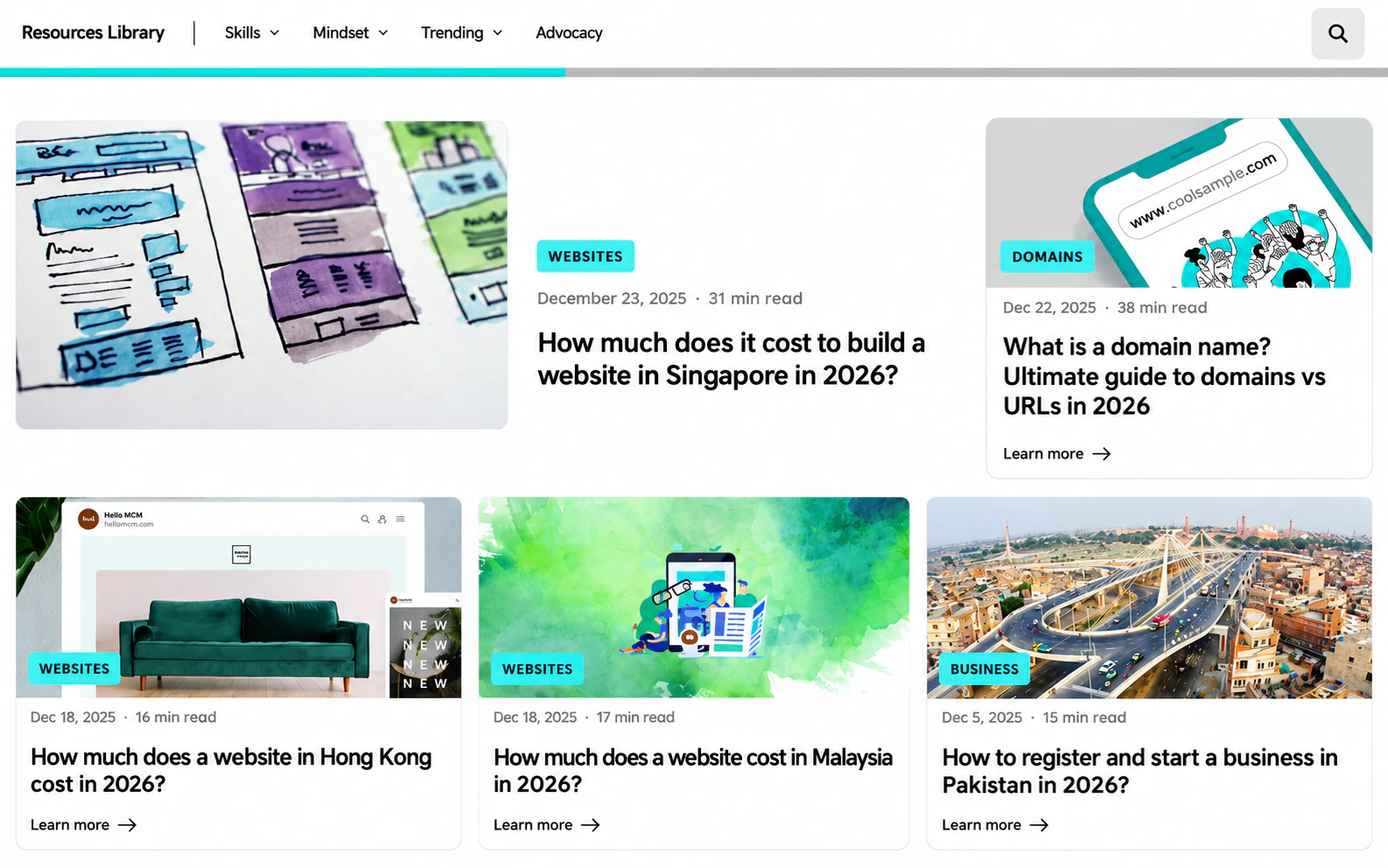
The team developed market-specific blog content to support stronger relevance across different APAC regions.
Examples included:
How to register and start a business in Pakistan in 2026?
How much does a website cost in Malaysia in 2026?
How much does it cost to build a website in Singapore in 2026?
Best small business ideas in Karachi, Pakistan
04
Search Intent and Topical Authority
To support performance, each piece of content was structured around search intent, local relevance and topical authority.
The goal was to help GoDaddy rank for valuable informational queries while building trust with users who were exploring how to start, manage or grow their businesses online.
05
AI Overview Visibility
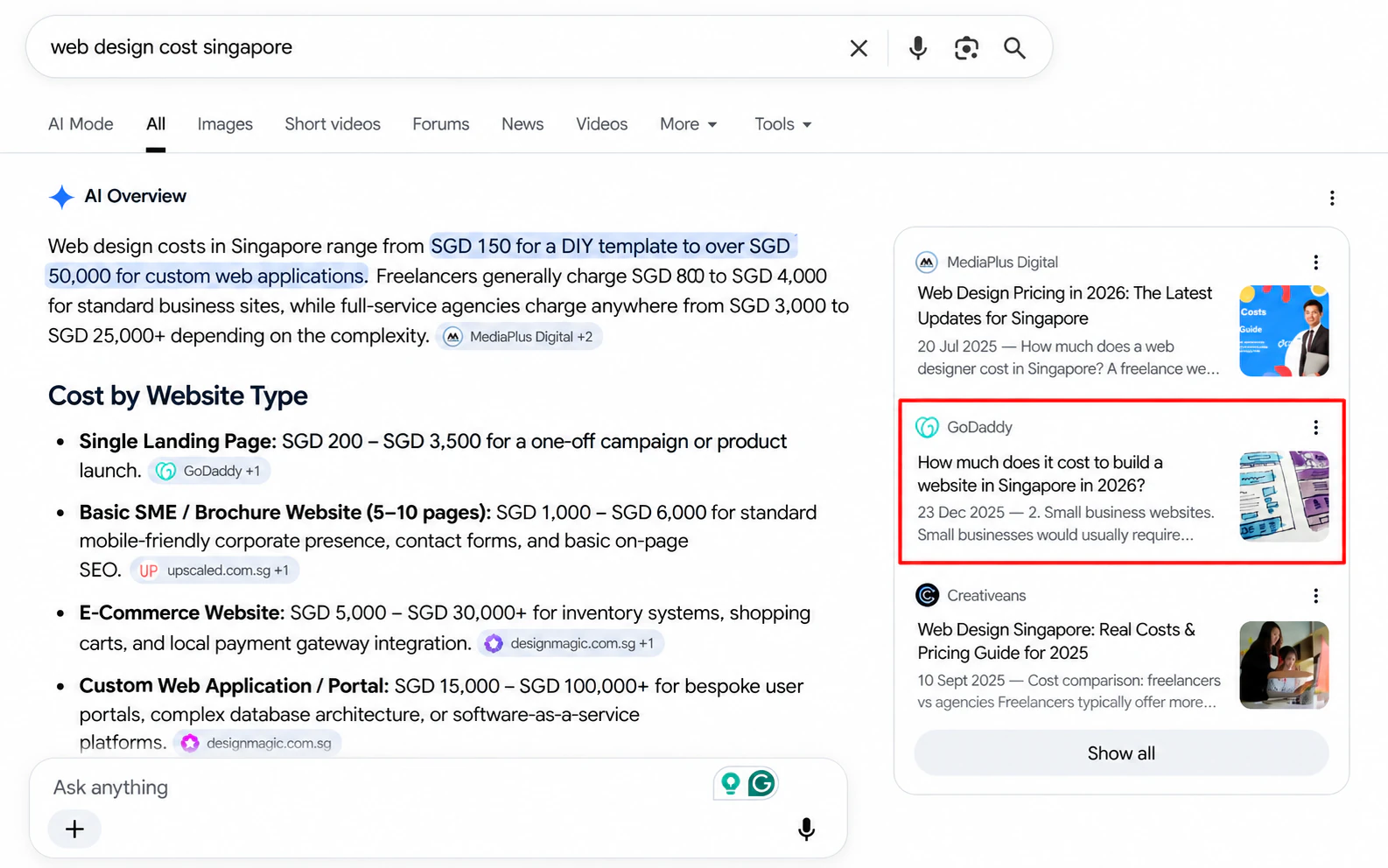
The strategy also supported visibility beyond traditional search.
Several content pieces were able to earn citations in AI Overviews, helping GoDaddy appear in emerging AI-led search experiences.
The Result
XX %
Page 1 Keywords
XX %
Traffic
XX %
AI Overviews Citation
Hear What The Client Had to Say
“Nigel is a proactive and enthusiastic writer who goes the extra mile, incorporating his SEO knowledge to help make the final deliverables better than initial briefs. Will work with him again!”
Ka Leng Ler, Social Media & Content Marketing Lead, APAC, GoDaddy

Who Developed This B2B Tech Content SEO Strategy?
Nigel Seah is the Founder of Arvor Digital.
With 6+ years of experience helping brands improve their keyword rankings, grow their organic visibility, traffic, and revenue.
A former SEO Team Lead at First Page Digital Singapore, he managed a team of 6 SEO specialists and a portfolio of campaigns worth over $200,000 in monthly recurring revenue (MRR). During his time there, he worked with brands such as Paula’s Choice, Castlery, and HipVan, with expertise spanning technical SEO, content strategy, international SEO, and AI search optimization.
He is also an SEO and GEO Consultant where he has worked with brands like GoDaddy and CoachVantage.


Ready to Grow Your B2B Tech Brand with Arvor Digital?
By combining localised SEO content, buyer pain point-led keyword targeting, and AI search visibility, we help B2B tech leaders dominate organic search and appear prominently in both Google Page 1 and AI Overviews.
No commitments
100% custom-tailored strategy
APAC Organic Performance
Live data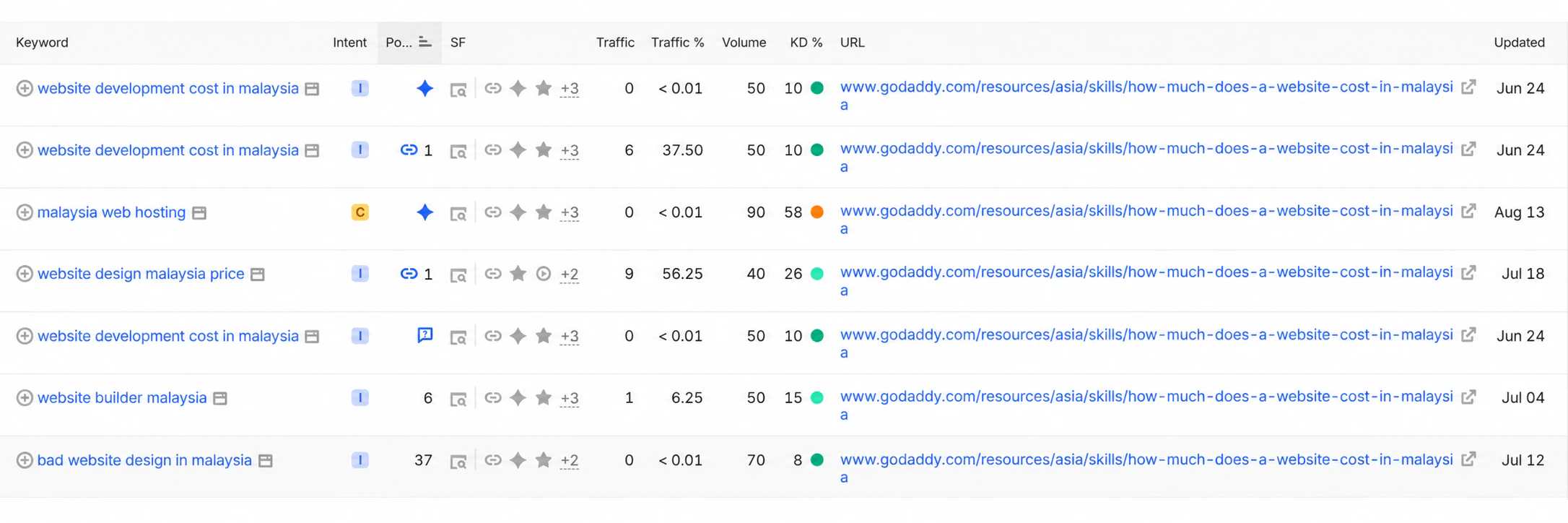
AI Overviews
Featured
Organic Share
+142% YoY
See Other Client Case Studies

Intent
Conversion-led traffic
Demand
Category search visibility
Value
Organic revenue contribution
SEO · E-commerce
Supporting organic conversions and revenue for Paula’s Choice.
An e-commerce SEO approach built around category demand, customer search behaviour, stronger landing pages, and commercially valuable organic traffic.

Traffic
Organic content discovery
Leads
Qualified business interest
Depth
On-site content engagement
SEO · B2B content
Building search visibility for DHL’s business content and advice hub.
A content-led SEO strategy designed to answer business search demand, strengthen topical authority, and create more useful discovery paths into DHL’s ecosystem.
FAQs about B2B Tech SEO
How does SEO support B2B tech lead generation?
SEO helps B2B tech companies reach decision-makers while they are actively researching problems, solutions and vendors. By targeting keywords across the full buyer journey, from educational searches to product-led queries, SEO can attract more qualified traffic and turn organic search into a long-term lead generation channel.
What makes B2B tech SEO different from regular SEO?
B2B tech SEO often involves longer sales cycles, more complex products and multiple stakeholders in the buying process. Instead of only focusing on traffic volume, the strategy needs to prioritise search intent, topical authority, technical accuracy and content that helps buyer personas understand why a solution matters.
Why is content important for B2B tech SEO?
Content is important because B2B tech buyers usually need to educate themselves before speaking to sales. Strong SEO content can answer technical questions, compare solutions, explain use cases and build trust before a prospect reaches out, making it easier for the brand to generate higher-quality leads.
What types of keywords should B2B tech companies target?
B2B tech companies should target a mix of problem-aware, solution-aware and product-aware keywords. This can include educational queries, industry pain points, software comparisons, alternatives, use cases, integration-related searches and high-intent commercial keywords that indicate buying interest.
Can B2B tech SEO help with AI search visibility?
Yes. A strong B2B tech SEO strategy can improve visibility across both traditional search engines and AI-led search experiences. Clear, well-structured, expert-led content increases the chances of being referenced by search engines, AI Overviews and large language models when users ask solution-specific or industry-specific questions.